The never ending battle of technology vs the car manufacturing cycle.


The manufacturing cycle of an average car is a long one. From the first day of planning through to the car being launched to the world takes from 4 – 5 years on average, which poses a variety of technology problems. 4- 5 years feels like an absolute age in the technology industry. 5 years ago we had just seen the iPhone 4s launch and Snapchat and Instagram were still in their infancy, yet brand new cars released in 2016 were being planned at this point.

The first day obviously isn’t the day all of the decisions are made, but there are phases along the roadmap where things get locked down to ensure the production cycle will work. This varies from company to company, but a specific example I can share is via Bentley. It takes around 48 months to design a Bentley and some of the architecture for infotainment systems can be defined even earlier. Sometimes this is due to technology sharing amongst the wider parent group, in this case VW. For Bentley’s new 2-seater sports car, which is due to launch in 2021, the lock down date for the interior technology has already passed in 2016. With a 5 year lead time between this point and the car reaching customers, it’s easy to see why the digital experience can lack behind the rest of the tech world.

A recent example is the £150,000+ Bentayga. The entertainment system has an 8 inch screen with a resolution of 800 x 480 pixels (116 pixels per inch), which compared to the Samsung Galaxy S7’s screen at 2560 x 1440 pixels (577 pixels per inch) is pretty lacklustre.

Bentley Bentayga.jpg

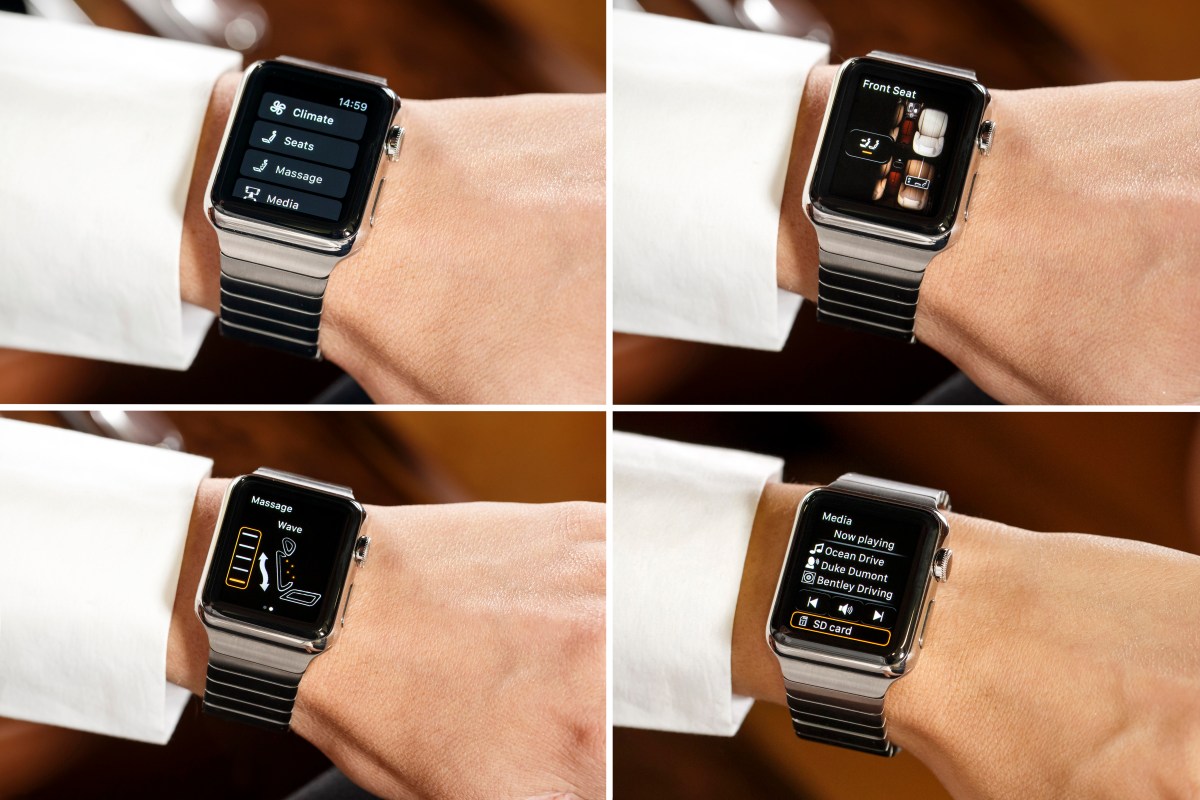
Bentley have adopted some more up-to-date technology though, by having Apple Watch integration you can control some of your in-car settings remotely. Although for the exception of setting the climate control to pre-warm or cool the car I’m not sure why you’d need to remotely turn on your massaging seats. If you’re already in the car, the button to activate this would be much faster to use – even if you’re being chauffeured and sat in the back – so some of this technology is part of the sales pitch and may exist because it can, but may not be actively useful for the customer.
Bentley's new Bentayga Apple Watch App 02.jpg

Another issue with the car industry is the reluctance to provide software updates to improve the usability of the digital experience. Occasionally there will be updates to mapping for example, but for the general rule, the car you drive out of the dealership won’t change one bit until the day it’s scrapped. One manufacturer which skips this trend is Tesla who have taken a different approach.

Tesla famously make use of a rather large 17 inch screen in a portrait orientation and a further screen above the steering wheel. The hardware for both the car and technology is obviously fixed at the point of manufacture, but the software is frequently updated via it’s inbuilt connection (or your wifi network) and brings not just software fixes, but actual visual changes and improvements to the way the car works. The most recent version is V8.01 which brought design changes and completely altered the digital layout on some of the system screens. It also brought along Autopilot improvements (Tesla’s “self driving” system which is currently more of an advanced cruise control), but only to cars with compatible hardware, so some older cars are now incompatible with certain features which brings in a level of obsolescence.

_JL85759.jpg

So what can manufacturers do to help bridge this issue of the manufacturing cycle and the continual march of technology?

By being influenced by the tech industry itself.

  1. Add the same technology across the model variants, no more 5 inch screen on the base model and a 9 inch screen for the percentage of customers who pay for the upgrade (an example would be the 2016 Mercedes E-Class). Differentiate models based on the power/range/interior styling instead. This would help simplify the manufacturing cycle and ensure a consistent experience across the range and reduce the testing burden of multiple variants.
  2. Add the most powerful hardware available within budget at the time. This would allow for future software updates or new options that you hadn’t considered at the lock down stage.
  3. Hire great teams of designers and researchers to work on your long term digital experience. Once a car is launched it shouldn’t be forgotten about and the team focused on the next secret model. There should be a greater continued focus on improving and keeping models up-to-date throughout their 5 – 7 year sales lifecycle (with reduced support once the car has come off the new car market, providing support for software bugs and glitches).
 

The disparity of technology amongst car manufacturers and price segments.

Audi A4 Interior

We live in a time where the technology in your pocket, is far more advanced than the technology in your car. In almost all cases, your phone is likely just a year or two old and forever competing with three to four main rivals driving technology onwards. Cars are trapped in a longer life-cycle, where even if you’re buying the latest and most expensive car on the first day it’s released, it will have been signed off for production around 4 years earlier.

If you’re buying a car that’s a bit more average, perhaps a Ford Focus rather than a Mercedes S-Class, then the technology is even older, and if you’re buying it once it’s been on the market for a few years you might be purchasing something that was designed almost 10 years earlier. If you’re paying for something at the lower end of the market, a Citroen C1 or Ford KA+ then you have even fewer options, in fact a lot of the technology on higher end cars won’t be offered at all. Just because you’re buying a low-cost car, should you be missing out on the technology that you’d expect from even the most basic smart phone. Bluetooth calling, sat nav and more?

Technology tends to trickle down within the car industry, again using the Mercedes S-Class example, ABS brakes, air bags and ESP have all made their debut on this model, before filtering down to the slightly cheaper E-Class and then the C-Class and then the A-Class. But today consumers are expecting more and more technology as it becomes ever more engrained in their lives and when for example the top of the range A-Class, can cost well in excess of the bottom of the range E-Class, then you can see why manufacturers are often inclined to not add a wide range of technology as standard.

Car manufacturers typically use technology to differentiate their range and offer this at a huge cost. This creates a technology split, where the majority of people will drive the basic version of the car, until the car manufacturer slowly adds more technology for free to compete with rivals as the car ages. For example, Mercedes created an “AMG Night Edition” of the E-Class when it was in the last year or so before being replaced which included almost all the extras you’d normally have to pay extra for, as a temptation to keep you from straying to Audi or BMW.

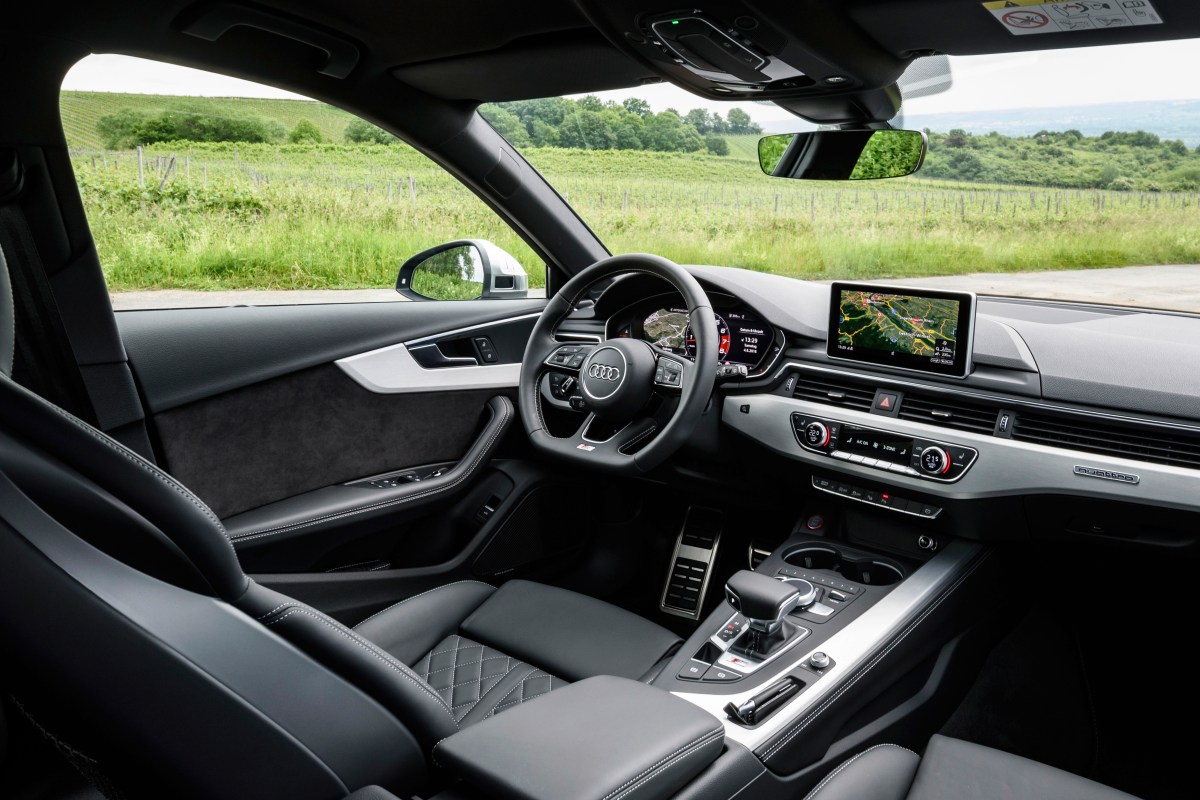
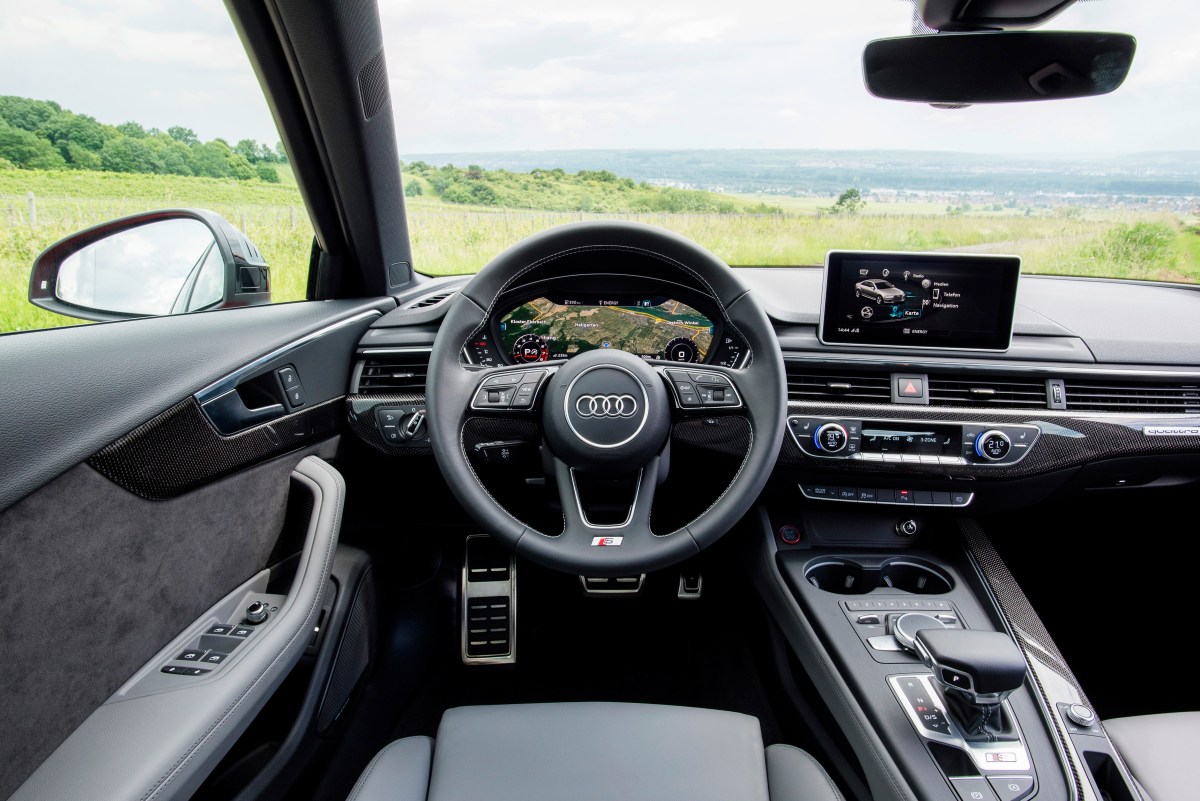
The german trio of Audi, BMW and Mercedes all offer technology packs to improve the fairly basic experience in their base models. If we compare the A4, 3-Series and C-Class, they all now come with basic sat nav and a fair range of safety equipment, but to get the technology you’d really want, you’d need to spend extra on option packs. For instance, with the Audi A4, there’s a technology pack at £1400, providing you with an 8.3 inch display which sits in the centre of the dashboard, a multimedia interface (i.e you can connect your phone via bluetooth to stream music) a touch controller (i.e the thing that lets you use the big screen) and satellite navigation maps.

If you want to actually have the experience you see in all the brochures, press shots and TV adverts, with the sat nav appearing behind the steering wheel, then you need to pay an additional £975 for the light and vision pack. Another technique as you can see is to bundle in options within one pack, meaning to get that one item you really want, you’ll end up paying for 3 – 4 other pieces of tech you have no interest in.

A165554_large.jpg

Technology can often draw you into the car, from seeing the TV or web adverts, perhaps the journalist reviews on YouTube, but technology still feels like a compromise in today’s vehicles. Should getting a nicer sat nav unit that sits behind the steering wheel really cost £2375, remembering that generally every pound, dollar or yen of optional extras you add, dissolves into nothing when you come to sell the car. Also in the increasingly popular personal contract leasing, adding a £500 option will often be priced at £500 divided by the number of months you’re leasing the car, so it can become very expensive, very quickly. Pricing technology at a high cost point means there’s limited availability so your car would have to be a custom order which could take up to 6 months depending on manufacturer, and with only a limited number of cars having the exact combination of optional extras, the customer support and ongoing compatibility can often be limited.

Making technology more affordable would increase uptake, suggesting a lower average price could be charged as the development costs would be spread further. It also means the car market would be advancing quicker than it currently is.

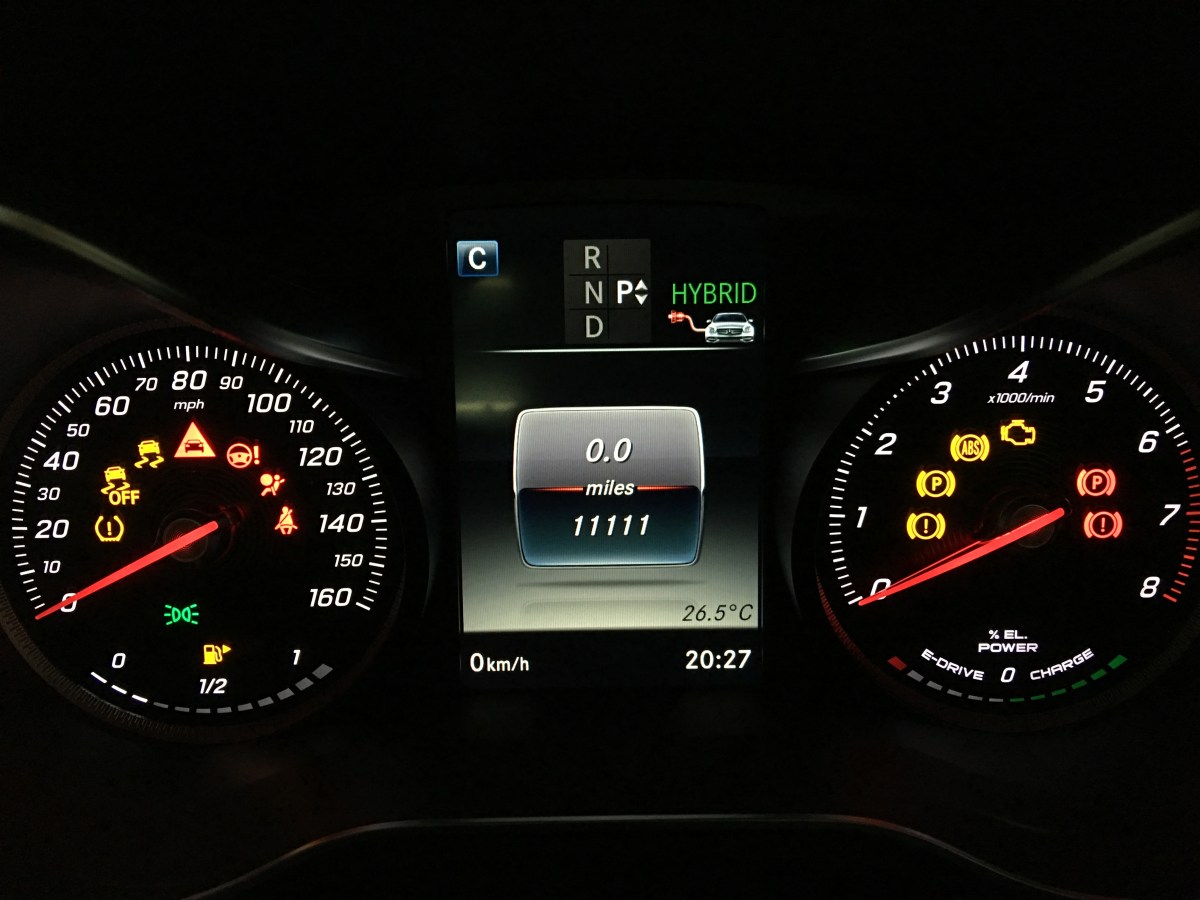
The other area of technology support within the car industry is the ongoing support and updating of hardware in the market place. There are very few manufacturers which will proactively update software for anything ‘non-essential’ like your sat nav. Recently I became aware of a software update for my car – which would add the external temperature display to the in-car screen. My car has all the sensors, but the temperature screen had been missed off on the early batch of cars. To get this update I had to use a combination of web forums, Twitter and a customer service number to understand exactly what the update was and to get the detail on what to relay to the dealership as they couldn’t find a trace of it (as it wasn’t a mandatory update). I then needed to book the car into the garage and wait for almost 3 hours for the update to complete. You can see why dealerships and manufacturers aren’t keen to encourage this step as it ties up very profitable service bays which could be otherwise better used for the garage finances.

IMG_0007.jpg
The end result of a 3 hour software update.

Only a few manufacturers are starting to offer OTA (Over The Air) software updates, the main one being Tesla and to a limited extent on the new E-Class. Tesla’s way of updating their entire portfolio of vehicles on the road with updated software means that every car is up-to-date with the latest version and in the case of Tesla, can also be fully compatible with adding data to their Autopilot system.

Over the air software updating does bring a lot of risk. People don’t want to find their car ‘bricked’ or a feature they’re familiar with to suddenly stop working as they’ve grown to know. Generally new features can be added, but the core fundamentals (how to open the sunroof, turn up the heating, turn the radio on) shouldn’t drastically change. It also brings a lot of potential reward. If you’d bought a Tesla Model S in 2014, you’d still have an ongoing set of improvements and enhancements appearing for you as the months pass. Tesla have just rolled out version 8.0 of their software, and unlike my Mercedes C-Class, no Tesla owner has had to book their car into a garage and sit around for 3 hours while it updates.